


Syllabus: GS3/ S&T
In Context
- Smart washbasins have gained widespread adoption across high-traffic public spaces like multiplexes, airports, metro stations, and malls.
What Is a Smart Washbasin?
- A smart washbasin is an automated plumbing fixture that uses electronic sensors to control water flow without any physical contact.
- It belongs to the broader family of phygital devices (physical + digital integration) that combine mechanical infrastructure with digital sensing technology to enhance hygiene, water efficiency, and user experience in public and private spaces.
The Science Behind It
- Electromagnetic (EM) Radiation: It refers to waves generated by the oscillation of electric and magnetic fields simultaneously capable of travelling through vacuum without any medium.
- Unlike sound waves (which need air) or water waves (which need water), EM waves are self-sustaining oscillations of electric and magnetic fields perpendicular to each other and to the direction of propagation.
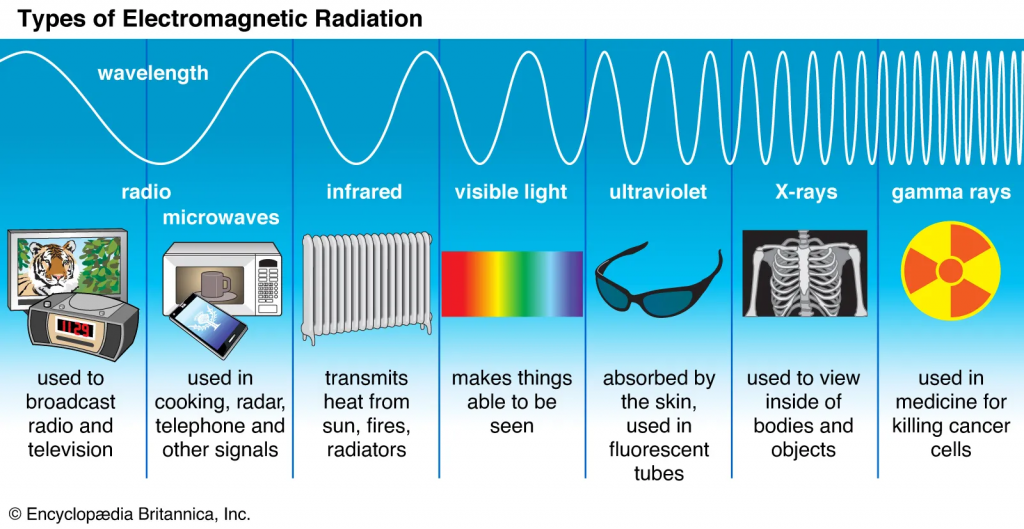
- Infrared (IR) Radiation: It occupies the region of the EM spectrum just below the frequency of red visible light, the word “infra” meaning “below.” Its frequency range is approximately 300 GHz to 400 THz, with wavelengths between 700 nanometres and 1 millimetre.
- IR radiation is emitted by all objects with a temperature above absolute zero (0 Kelvin) including the human body. It cannot be seen by the human eye but can be detected by specialised sensors.
How Smart Washbasins Work?
The system functions as an invisible optical loop built on two primary components working in tandem:
- Component 1: IR-LED (Infrared Light Emitting Diode): Acts as an invisible torch, continuously emitting infrared light into the space beneath the tap. This emission is constant, regardless of whether a hand is present or not.
- Component 2: Photodiode (Sensor): A semiconductor device that conducts electricity when infrared light of the correct frequency falls on it — functioning as an electronic switch calibrated to respond only to specific IR frequencies.
Key Features
- Touchless Operation: Eliminates physical contact entirely, the most significant hygiene benefit in high-traffic public spaces where cross-contamination risk is highest.
- Frequency Specificity: Photodiodes are calibrated to respond only to the specific IR frequency emitted by the paired LED.
- Automatic Shut-off: The circuit breaks instantly when the reflecting surface (hand) is removed, preventing water wastage from taps being left running, which is a persistent problem with traditional manual fixtures.
Significance
- Public Health: Touchless operation removes a critical contact point for pathogen transmission in restrooms like during COVID-19 pandemic.
- Water Conservation: India loses significant volumes of potable water annually to running taps in public facilities. The instant-off mechanism helps directly contribute to India’s water security goals under Jal Shakti Abhiyan and Atal Mission for Rejuvenation and Urban Transformation (AMRUT).
- Smart Cities Mission: Sensor-driven public infrastructure is a tangible deliverable of India’s Smart Cities Mission, which targets technology-integrated urban living across 100 selected cities.
- Accessibility: Touchless fixtures significantly improve accessibility for elderly individuals, persons with disabilities.
Source: TH
Previous article
India-South Korea Special Strategic Partnership
